

In jazz, a strong line-up is no longer always enough. Not because the music matters any less, but because in an increasing number of European clubs and festivals, the real difference is made elsewhere: in the way an evening acquires its own identity. Audiences still come for the musicians, of course. But what remains in the memory often depends on something else — the tension of the night, its atmosphere, that invisible layer capable of turning a concert into an experience.
This is where The Aftersound becomes particularly compelling. Created by Andrei Slăvuțeanu and developed on stage together with actor Alexandru Pribeagu, it is not a format designed to compete with jazz, nor a project that demands a separate space of its own. It is, rather, a finely calibrated artistic intervention: an invited format conceived to work in dialogue with host ensembles, clubs and festivals seeking more than an impeccable sequence of sets.
Its premise is unusually clear. The Aftersound is not, in any general sense, about music alone. It is about the inner life of the jazz musician: what he feels before stepping onto the stage, what moves through him during the concert, what remains after the applause and after departure. In other words, the project shifts attention away from the visible side of the evening — light, performance, audience response — toward what usually remains hidden: pressure, concentration, instinct, fragility, memory, exhaustion, exhilaration, and that particular kind of silence that only begins once the concert is over.
That choice gives the project its distinct status. It is not a concert with commentary. It is not a spoken-text recital set against a musical backdrop. Still less is it one of those hybrid formulas in which two artistic languages are placed side by side merely to create an air of sophistication. The Aftersound works differently: it does not add something on top of the concert, but enters into its interior and makes its invisible dimension legible.
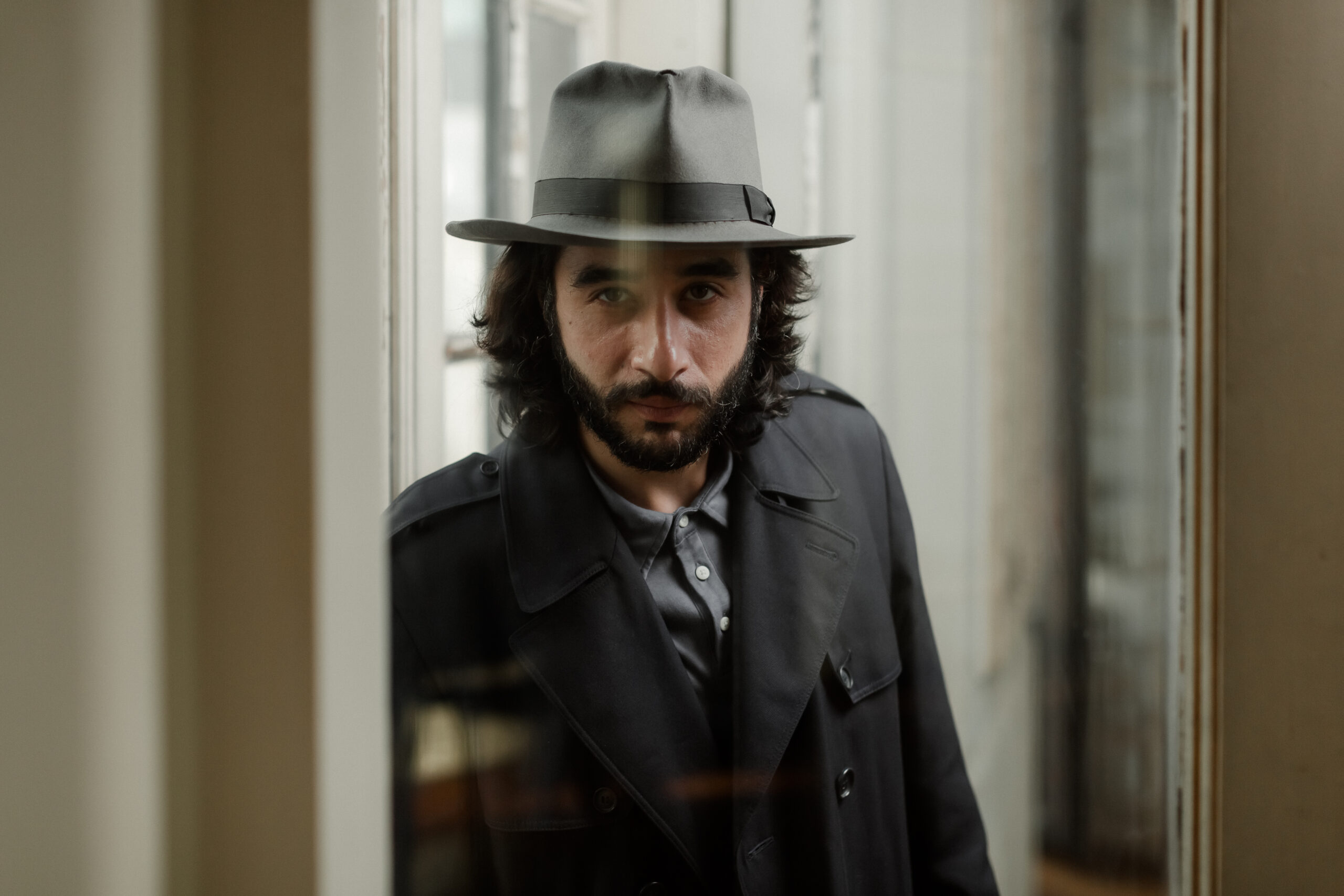
At the centre of this construction is Alexandru Pribeagu, whose stage presence has the density such material requires. He is not there to illustrate the music or to explain it. His role is not that of an intermediary between stage and audience, but of a presence that opens up a tension already there, though rarely articulated. What he brings is not text in any decorative sense, but body, rhythm, restraint and intensity. He does not take the musician’s place; he makes the musician’s experience intelligible.
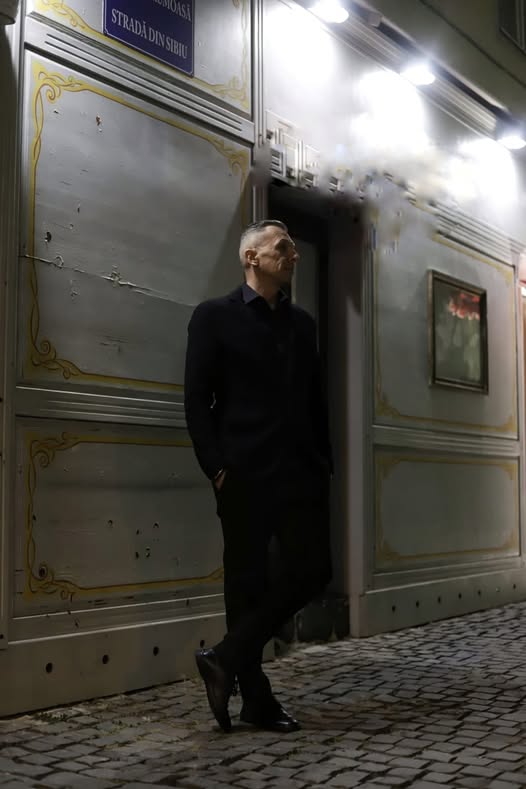
On the other side stands Andrei Slăvuțeanu’s concept, whose strength lies in a precision many projects of this kind tend to avoid. Instead of resorting to vague rhetoric about “the meeting of the arts,” it is built around a theme that is both clear and immediately recognisable: the concert understood not simply as a public moment, but as a total experience — before the stage, on it, and after it. That clarity makes the project easier to read internationally than many other initiatives that rely on atmosphere, yet never quite define their centre.
And in the current context, that matters. More and more European cultural spaces are trying to move beyond the logic of uniform programming. Not necessarily through spectacle, but through distinction: evenings with a recognisable centre of gravity, formats that can be woven elegantly into an existing concert while giving the audience the sense of a singular experience rather than one more night that could be endlessly repeated. In this sense, The Aftersound responds to a real programming need: the desire to add meaning, memory and tension without forcing the event into artificial theatricality.
One of its major strengths is that it does not present itself as a fixed touring band, but as an invited format able to enter into dialogue with different live jazz line-ups — trio, quartet or other configurations. For a host ensemble, that means the project does not arrive to take over the evening, but to deepen it. For a club, it means there is no need to suspend its identity in order to make room for an oversized production; it can instead integrate a format that works with precision and subtlety in the very material of the concert. For a festival, it offers a flexible, recognisable project, distinct enough to alter the temperature of a programme without disrupting it.
That mobility is essential. On the international circuit, projects travel more easily when they know exactly what they are and, at the same time, know how not to impose themselves on the context that receives them. The Aftersound possesses precisely that intelligence of place. It can exist in an intimate club, in a special evening built around a band, in a guest set, or in a festival looking for contemporary forms without ostentation. It does not need to simplify what it has to say in order to become programmable, nor over-explain itself in order to be understood.
Ultimately, what it proposes is strikingly current: not more spectacle, but greater depth. Not an overstatement of the concert, but an opening of it. Not a form that distracts from the music, but one that gives it another chamber of resonance. At a time when many live evenings resemble one another precisely because they rely on the same programming reflexes, The Aftersound offers something rarer: a shift in perspective that does not cancel the concert, but allows it to remain in the memory differently.
Perhaps that is why the project should not be read only as an artistic proposal, but also as a sign of a broader shift. Clubs and festivals are no longer looking only for good names. They are also looking for forms capable of giving an evening its own relief. And where many projects add concept as ornament, The Aftersound turns it into experience.
Not every concert needs more.
But some do need a second breath.
And that is where this project truly begins.
Acesta este un site cu caracter informativ și educativ . Publicam aceste informații pentru cunoștințele culturale ale publicului. Dacă doriți să eliminăm o postare sau să facem modificări, vă rugăm să ne contactați. Nu intenționăm încălcarea dreptului de autor.
