

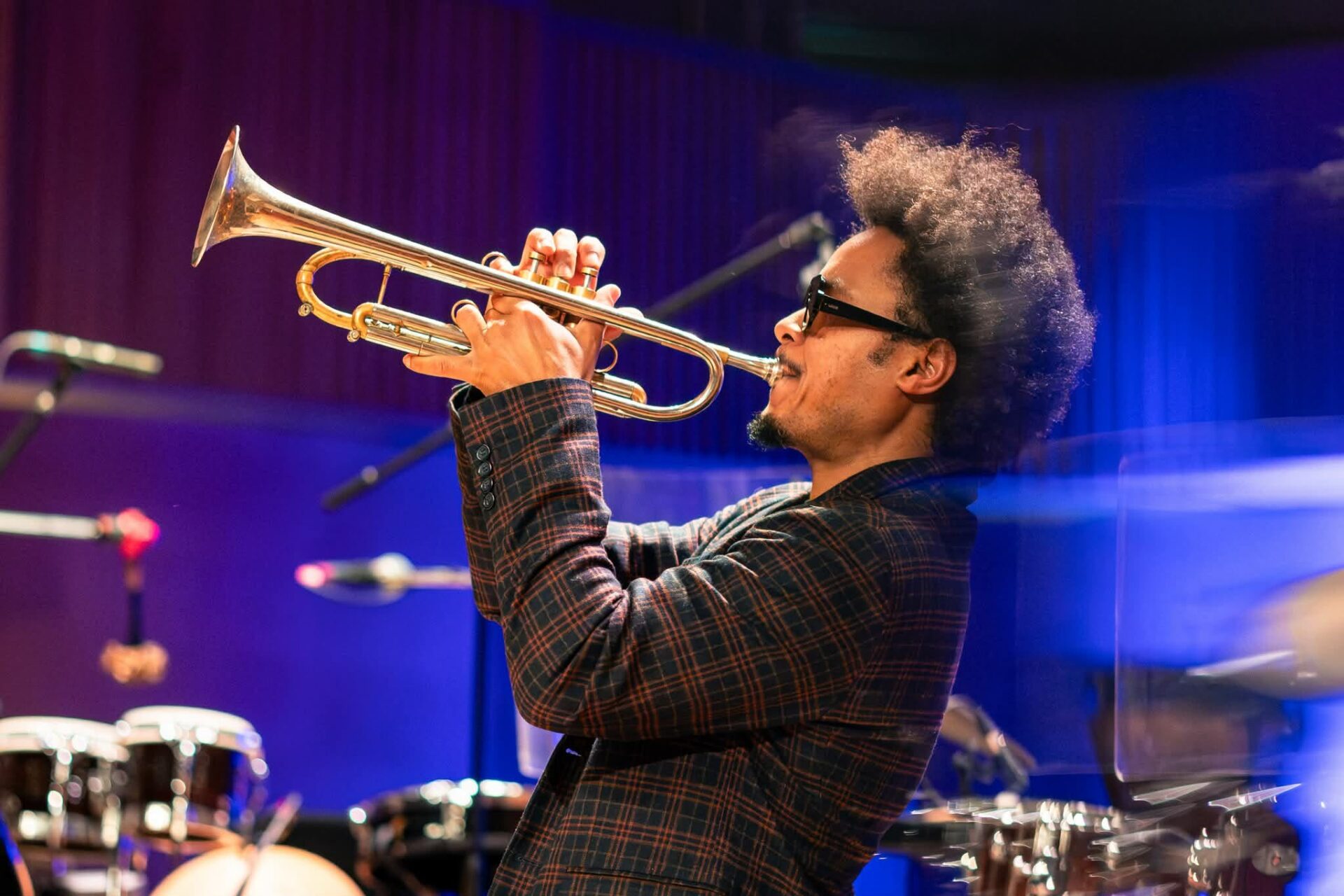
The Barcelona encounter between the Carlos Sarduy Trio and The Aftersound, the jazz-and-theatre project created by Andrei Slăvuțeanu, with Alexandru Pribeagu at the centre of its scenic dimension, confirmed something rare: live music should not be added to theatre, but allowed to alter its structure. And when the musician is Carlos Sarduy, the stage cannot remain the same.
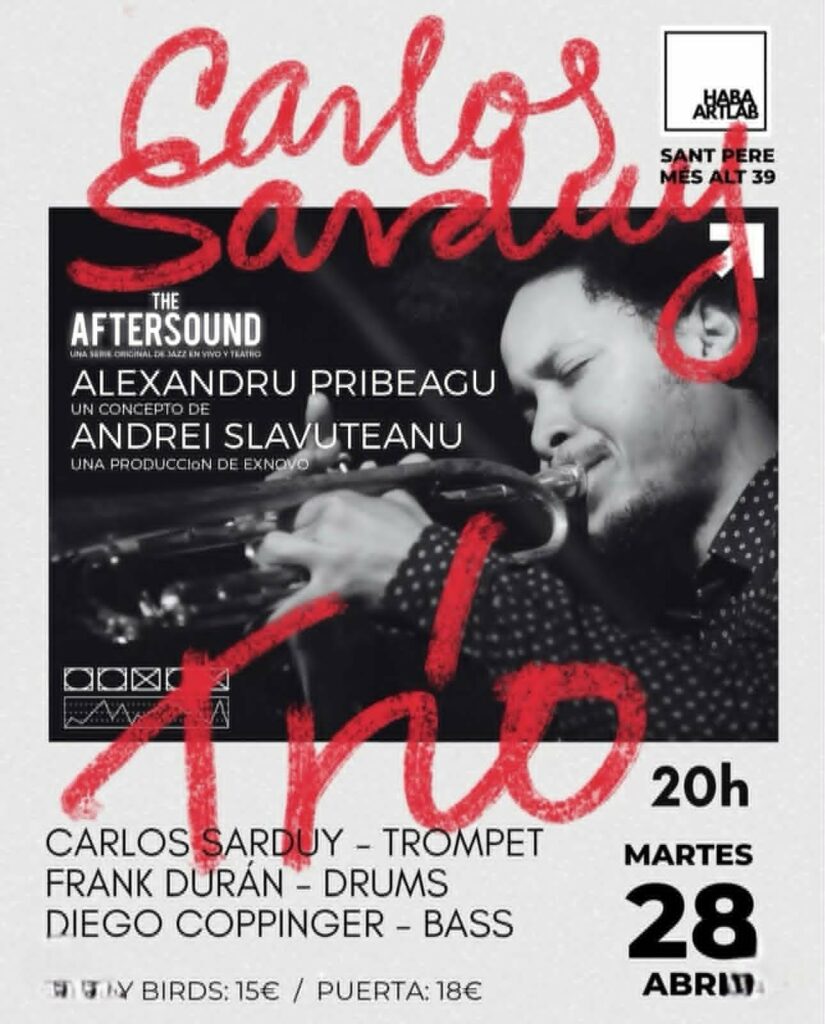
Carlos Sarduy does not enter a project as a mere guest. Not even when the poster presents him as the musician of the evening. His presence carries a weight that changes the relationships between those on stage. Not through excess, not through display, not through any need to occupy everything, but through a rarer kind of authority: that of an artist who makes the space listen differently.
In Barcelona, in his encounter with The Aftersound, Sarduy became more than the musical centre of the performance. He became the point of pressure around which the scenic form tested its own truth. A project positioned between jazz and theatre can easily fall into one of two traps: using music as atmosphere, or turning theatre into an explanation of the concert. Here, the formula moved in another direction. Jazz did not accompany theatre, and theatre did not illustrate jazz. The two met in a more difficult, more alive, more unstable territory.
Carlos Sarduy comes from a musical culture in which sound is not separated from body, memory, rhythm and risk. His trumpet does not seem to chase immediate effect. It does not come to seduce easily, nor to cover the space with virtuosity. It has a precision that never turns cold and a freedom that never becomes decorative. In the way he plays, tension is not announced; it is produced. The pause is not emptiness, but breath. And sound does not close meaning; it opens it.
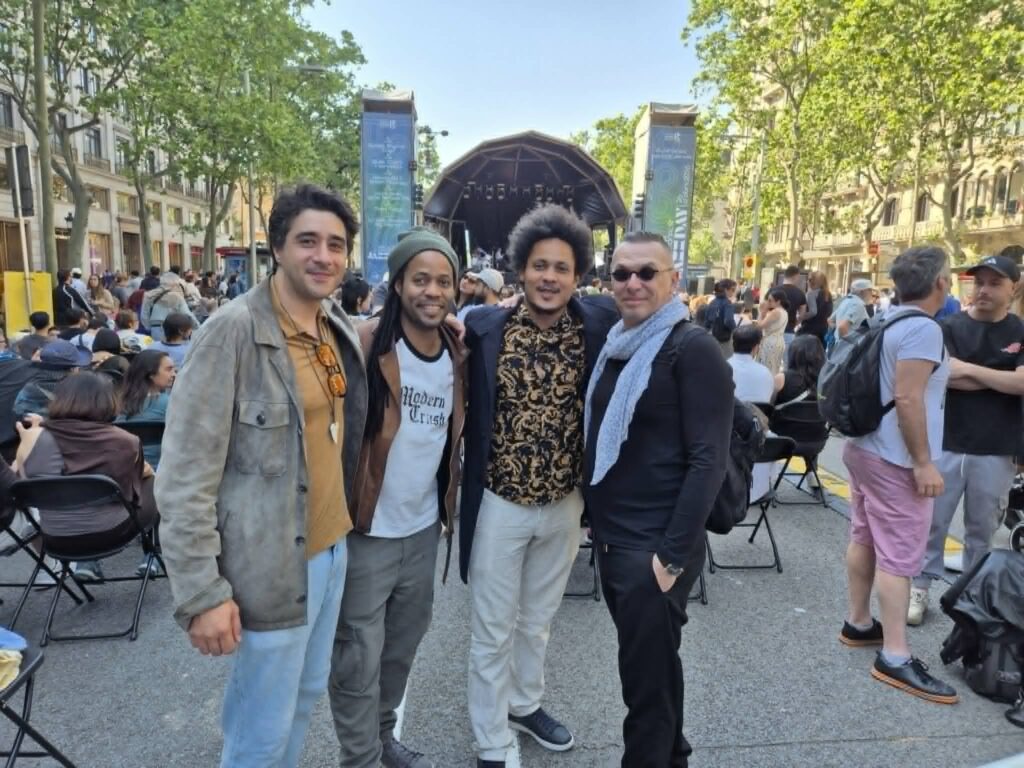
That is why the encounter with The Aftersound carries a particular importance. The project conceived by Andrei Slăvuțeanu does not begin with jazz as a musical genre, but with what remains hidden inside the musical act. What happens to the artist before stepping on stage? What is consumed within him during the concert? What remains after the applause, when the audience has left and the sound no longer belongs to the room? These questions cannot be sustained by decorative music. They require a musician capable of becoming scenic matter himself.
That is exactly what Sarduy brings: not accompaniment, but living material. In The Aftersound, his trumpet does not fill the spaces between text and gesture; it makes them visible. Sound enters into relation with silence, with the actor’s body, with the immediate memory of the stage. It does not explain. It does not comment. It does not translate. It allows jazz to exist as a dramatic force in its own right.
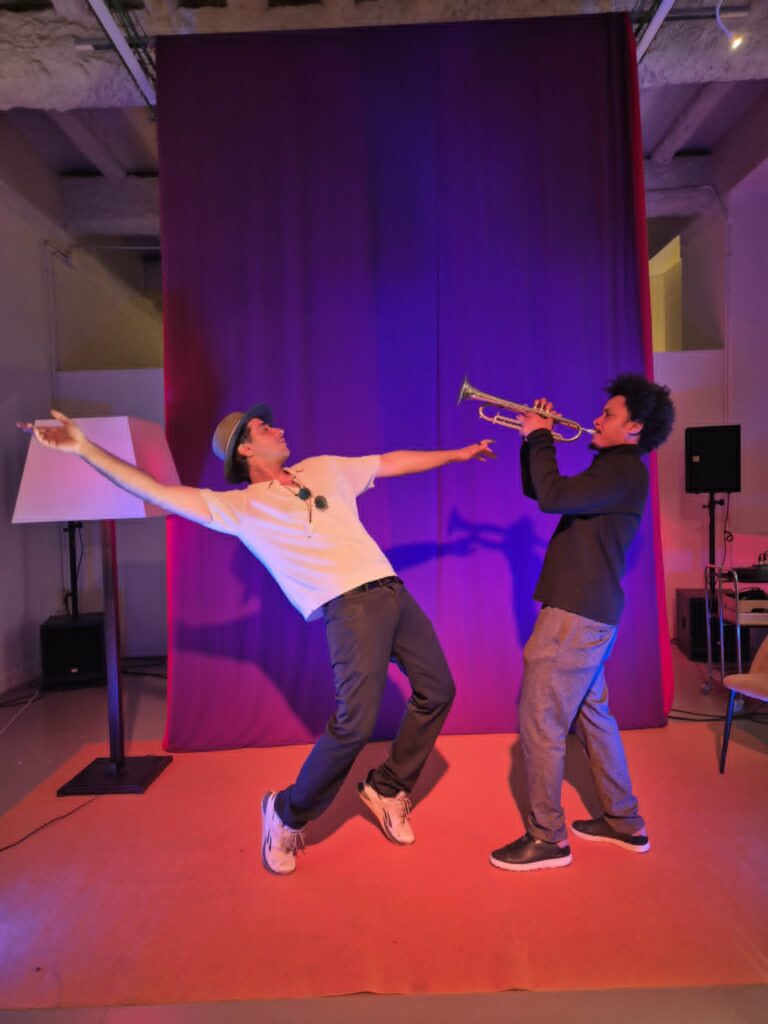
Alexandru Pribeagu enters this construction with a presence that does not try to compete with the music. This is one of the project’s intelligences. The actor does not “play” jazz, does not imitate the musician, does not turn sound into obvious gestures. His body works in the vicinity of the music: receiving it, contradicting it, letting it pass, sometimes holding it as a trace. Between Sarduy and Pribeagu there is no relationship of subordination, but one of tension. The musician remains a musician. The actor remains an actor. But the space between them begins to produce theatre.
The concept and texts by Andrei Slăvuțeanu keep this mechanism away from the comfortable territory of poetic formulas. The Aftersound does not speak of “the magic of music” and does not try to turn jazz into a beautiful metaphor. Its stake is more severe: the solitude of the artist inside the public act. The difference between what the audience receives and what the artist consumes. The fragility of the one who steps into the light, yet remains with part of himself in shadow.

In this context, Carlos Sarduy is not merely an important name associated with the project. He is a test. His presence reveals whether the form can withstand itself. Whether theatre can stand beside a real musician without becoming decorative. Whether text can breathe alongside jazz without explaining it. Whether the actor can inhabit the same stage as the music without reducing it to a pretext.
Barcelona showed that this formula can work. More than that: it can travel. The Aftersound is not defined by a fixed set or by a rigid construction. It can adapt to a jazz club, a festival, an intimate stage, a space where the closeness between artist and audience becomes part of the language. But in order to work, it needs musicians who do not merely play correctly, but transform the stage into a living organism. Carlos Sarduy is such a musician.
His strength does not lie only in his career, his trajectory or his recognition. It lies in the way his music changes the temperature of a room. Some artists impress through what they show. Sarduy impresses especially through what he does not force. Through the way he allows sound to work. Through the way a musical phrase can become scenic tension without being artificially theatricalised.
From here comes the quality of the encounter with Alexandru Pribeagu and Andrei Slăvuțeanu. The Aftersound does not use Carlos Sarduy as an ornament of prestige. It places him at the centre of a question. And Sarduy does not answer through explanation, but through music. Through a sound that is not content with being heard, but continues to act after the note has ended.
In a cultural market where many projects rush to define themselves through labels, the Barcelona encounter proposes a rarer direction: jazz as scenic territory, theatre as a form of listening, the musician as a real presence, not a pretext. Carlos Sarduy gives the project weight and risk. Alexandru Pribeagu gives it body. Andrei Slăvuțeanu gives it concept, text and architecture.

What remains after this encounter is not only the image of a successful concert. It is the sense of a form beginning to find its language. A performance in which music does not come to embellish theatre, and theatre does not come to explain music. A space in which the artist is seen not only in the moment of brilliance, but also in the invisible part of the scenic act.
Carlos Sarduy does not add music to a performance. He changes its breathing. He gives it a tension that theatre alone cannot manufacture. He brings that impossible-to-simulate truth: the living sound of an artist who does not need to explain jazz, because he allows it to happen.
Acesta este un site cu caracter informativ și educativ . Publicam aceste informații pentru cunoștințele culturale ale publicului. Dacă doriți să eliminăm o postare sau să facem modificări, vă rugăm să ne contactați. Nu intenționăm încălcarea dreptului de autor.
