

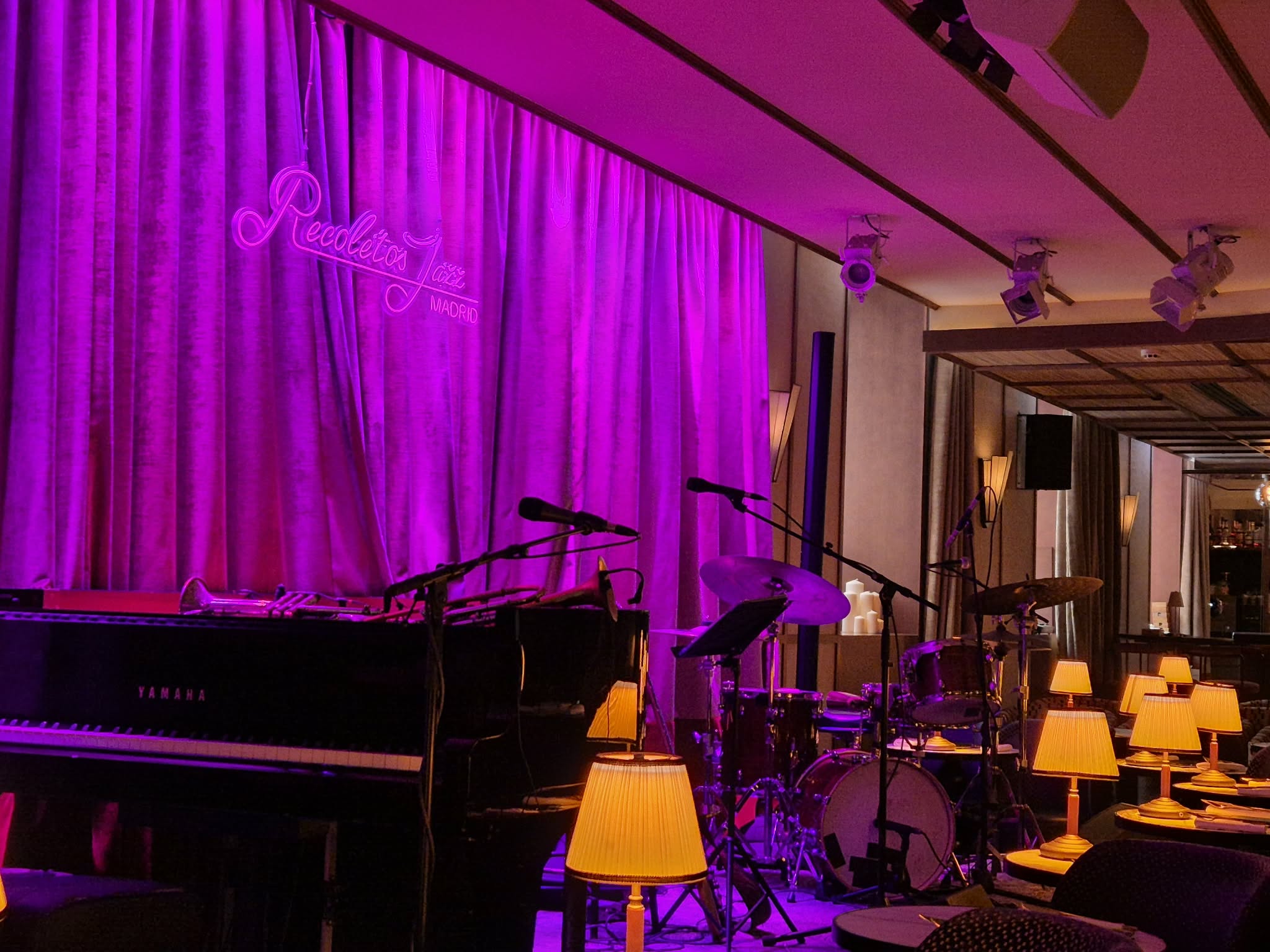
A few streets from El Retiro, in a part of Madrid where the city displays its elegance without hesitation, there is a place where everything begins with a diminishing.
You descend from street level, leaving behind the noise of traffic, hurried conversations and the broad light of the boulevards. Inside the AC Hotel Recoletos, the path to the club feels like a passage from a public city into a secret one. There is no monumentality, none of the theatricality with which some venues attempt to proclaim their importance before the music has even begun.
At Recoletos Jazz, prestige is not announced. It is managed discreetly.
The room is not large, and that is one of its strengths. The distance between the stage and the audience is short enough for the music to stop feeling like a product offered to listeners and become instead an event that encompasses everyone present.
You can hear details that would be lost in a larger hall: the attack of a note, the breath before a phrase, the brief meeting of the musicians’ eyes, the instant when a rhythm shifts without anyone giving a visible signal. The audience does not merely witness the finished result. It can follow the way the music is being built.
This closeness also changes the behaviour of the listeners. Conversations diminish, gestures become more attentive and time acquires a different density. Not because the venue imposes solemnity, but because the music naturally occupies the space it has been given.
Recoletos is not one of those restaurants that adds a concert to complete the atmosphere. Nor is it a performance venue that reluctantly tolerates the presence of tables and a bar. There is a carefully maintained balance between the two functions. Service continues, but it does not compete with the stage. People can dine and have a glass of wine, but the centre of the evening never shifts away from the musicians.
It sounds simple. In reality, it is the result of collective discipline.
A jazz club may have good acoustics, fine instruments and a convincing programme. It may invite well-known artists and attract a loyal audience. But its identity is formed elsewhere: in the way a musician is welcomed, in the rhythm with which the audience enters the room, and in how delays, changes, unexpected events and all those small tensions that listeners should never notice are handled.
At Recoletos Jazz, organisation never becomes part of the show. That is precisely why it works.
There is a form of professionalism that makes itself felt through authority, and another that expresses itself through the absence of friction. When the evening begins, everything already seems to be in place: the tables, the lighting, the sound, the discreet movement of the team and the readiness of the stage for the one thing that can never be fully programmed—improvisation.
Jazz has this particular quality: it requires a precise infrastructure in order to appear free.
A good concert is not born solely from the individual talent of its musicians. It also depends on their ability to take risks, to abandon the predictable course of a piece for a few minutes, to listen to what is happening between the instruments and to respond without delay.
At such a moment, the club ceases to be merely a space. It becomes part of the music.
On the evenings of 15, 16 and 17 July 2026, Recoletos Jazz hosted three concerts in which this freedom was apparent from the opening bars.
This was not a matter of repeating the same formula on three consecutive nights. Each concert had its own geometry, its own tension and its own way of shaping the dialogue between stage and room.
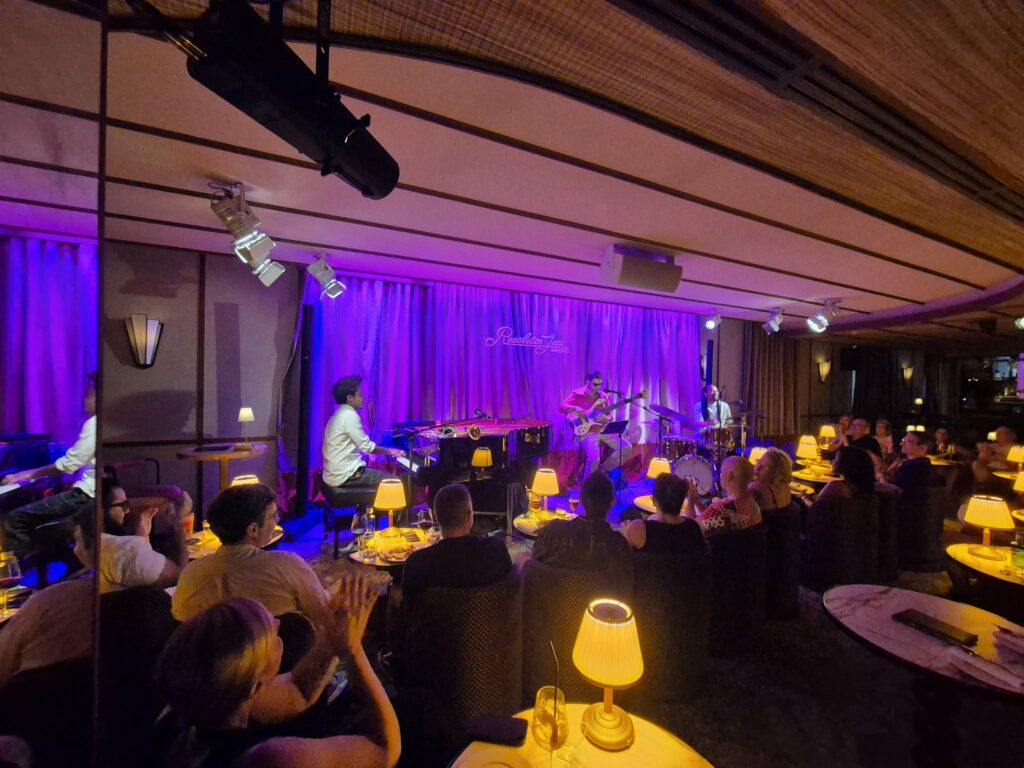
Carlos Sarduy Dimet brought that rare combination of strength, precision and imagination that allows the trumpet to move, within seconds, from almost architectural clarity to rhythmic explosion. Around him, the musicians did not function as mere accompaniment, but as partners in a conversation that was constantly changing.
Cecilia Krull brought to this musical architecture a vocal presence capable of preserving control and fragility at the same time. Marco Poingt gave the piano energy, mobility and a freedom that never sought to dominate the ensemble. Frank Durand sustained the movement of the music with a precision that never became rigid.
Alongside them, Dany Noel and Reinier Elizarde, “El Negrón”, brought the rhythmic depth without which Latin jazz risks becoming little more than a stylistic formula. At Recoletos, rhythm was not an ornament. It was the living structure of all three evenings.
What remained was not only the virtuosity of each musician, although that was evident, but the way in which powerful individual voices succeeded in creating a common space.
In jazz, artistic generosity can be heard.
It can be recognised in the moment when a musician knows how to move forward, but also when to step back. In the way they make room for an idea that has emerged elsewhere on the stage. In the ability to sustain a phrase begun by someone else. At such moments, music is no longer a succession of performances, but a form of trust.
I attended all three concerts, together with my friends Carlos Sarduy Dimet, Cecilia Krull, Marco Poingt and Frank Durand, in what became a true celebration of jazz. Dany Noel and Reinier Elizarde, “El Negrón”, were also with us.
For me, those evenings meant more than encountering extraordinary musicians. They also meant discovering a place that understands that a jazz club is not built solely through its programme, its design or its reputation.
It is built through the continuity of its standards.
My special thanks go to Ms Verónica Mora, who was an extraordinary host. Some people exercise their role through an insistent presence; others manage to offer attentiveness, elegance and reassurance without taking up the space of those around them. Verónica Mora belongs to the second category.
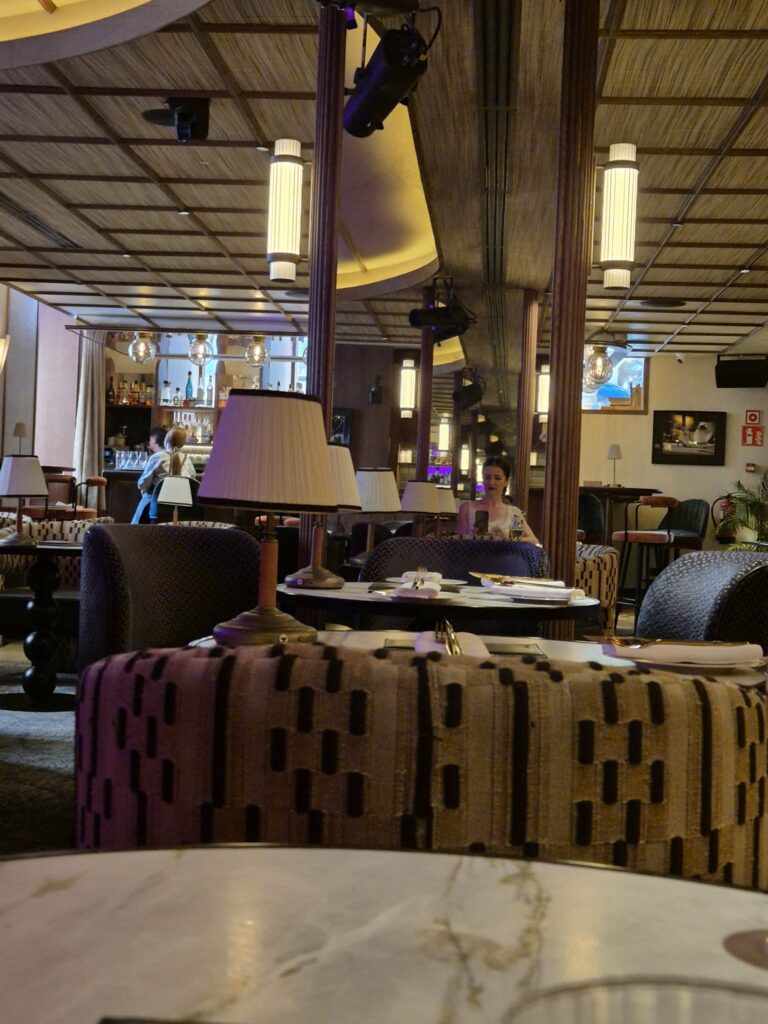
I would also like to thank the entire team who make it possible, night after night, for Recoletos Jazz to operate at this level: those who prepare the room, those who welcome the audience, those who look after the artists, those who adjust the sound and lighting, and those who preserve the fragile balance between hospitality and concentration.
Great jazz clubs are not great because of their size.
They are great because of the memories they create, because musicians want to return, and because members of the audience remain in the room for a few moments after the concert has ended, as though leaving too quickly might cause something to disappear.
At Recoletos Jazz, Madrid does not vanish.
It simply lowers its voice so that the music can be heard.
Andrei Slăvuțeanu
Acesta este un site cu caracter informativ și educativ . Publicam aceste informații pentru cunoștințele culturale ale publicului. Dacă doriți să eliminăm o postare sau să facem modificări, vă rugăm să ne contactați. Nu intenționăm încălcarea dreptului de autor.
