

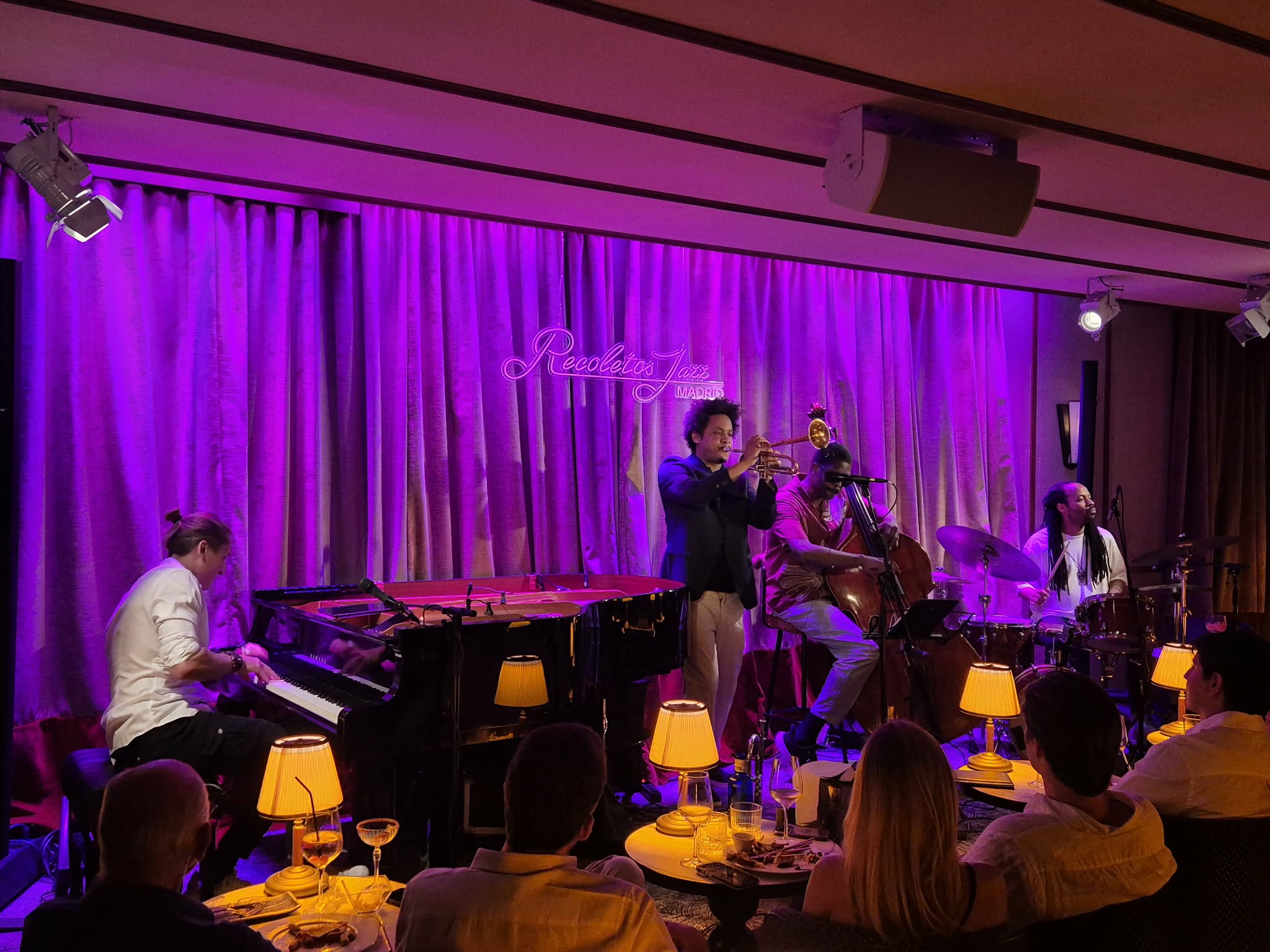
Three evenings at Recoletos Jazz Madrid revealed not only the virtuosity of one of contemporary Latin jazz’s great trumpet players, but also his ability to turn every concert into a world that exists only for a while. For me, the encounter also carried a personal dimension: Carlos Sarduy is my friend and artistic partner in the jazz-theatre project The AfterSound.
There are musicians you recognise by their sound, and musicians you recognise by the way they change the air in a room.
Carlos Sarduy belongs to the second kind.
During the three evenings of The Latin Jazz Nights by Carlos Sarduy at Recoletos Jazz Madrid, his trumpet was more than the central instrument of the concerts. It was the point from which the music was continually organised, dispersed and rebuilt. At times precise and luminous, at others incandescent and almost restless, it did not lead the ensemble through authority, but through energy.
Sarduy does not seem interested in reproducing a formula that has already proved successful. Not even his own.
His jazz carries a Cuban lineage, a Latin pulse, the discipline of an extraordinary technique and the freedom of improvisation. Yet these elements are never displayed as deliberate ingredients arranged within a repertoire. They are the living substance of music that decides what it will become at the very moment it is played.
This may be one of the differences between virtuosity and art. Virtuosity shows you what a musician is capable of. Art makes you forget that, only a few seconds earlier, what you are hearing seemed impossible.
Carlos Sarduy possesses an astonishing technique, but he never turns it into an exercise in domination. His sound can rise to the very edge of intensity without becoming aggressive, and descend towards fragility without losing its tension. Behind every eruption there is control. Behind that control, however, one can still feel the risk.
And true jazz begins where risk can no longer be concealed.
The three concerts at Recoletos were not repetitions of the same performance for three different audiences. Each evening built its own architecture, shaped by the musicians on stage, the energy in the room and the unexpected directions opened by improvisation.
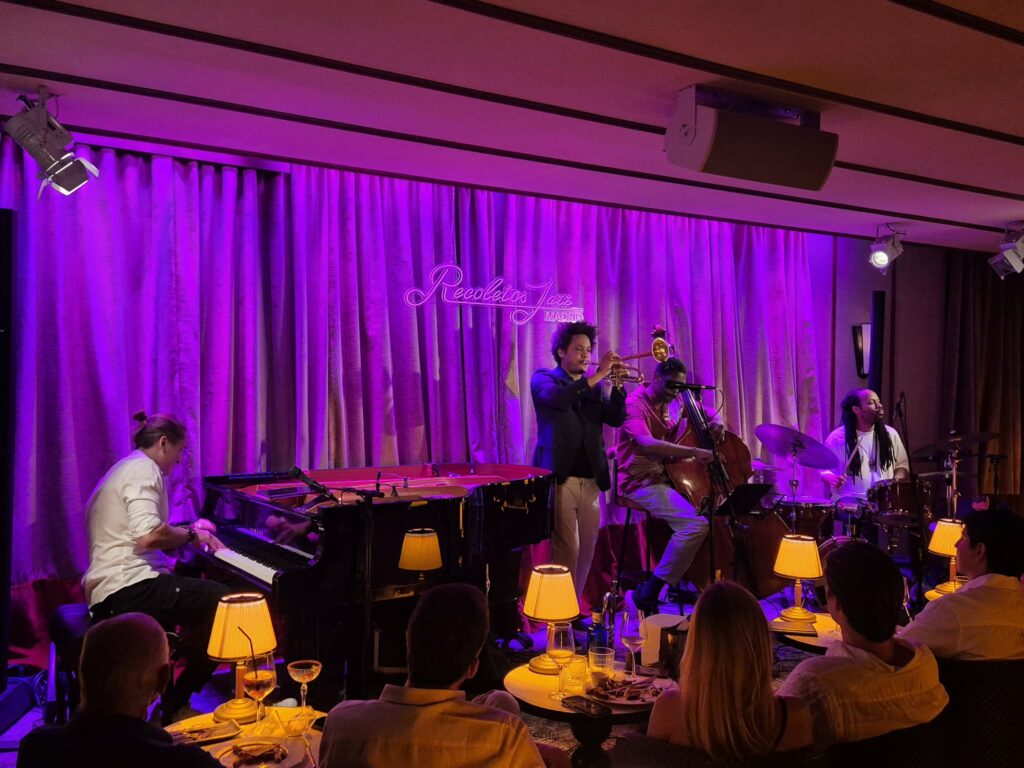
Carlos Sarduy Dimet was joined by my friends Cecilia Krull, Marco Poingt and Frank Durand in what became a genuine celebration of jazz. Dany Noel and Reinier Elizarde “El Negrón” also joined them.
This was not simply a succession of guest appearances. Each presence altered the relationships within the music.
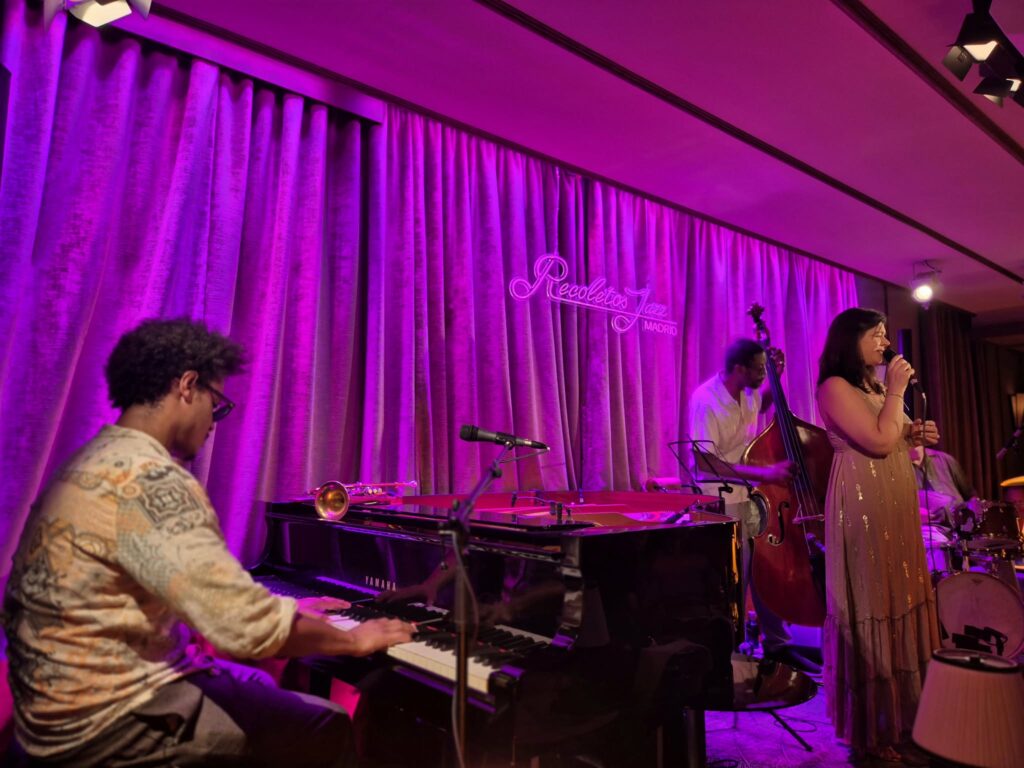
Cecilia Krull’s voice introduced a different kind of tension, bringing clarity and vulnerability close together. Marco Poingt’s piano opened harmonic and rhythmic spaces in which the ensemble’s energy could expand. Through precision and mobility, Frank Durand created the kind of support that does not confine the music, but allows it to move forward.
Dany Noel and Reinier Elizarde “El Negrón” brought the rhythmic depth without which the Latin pulse might have remained no more than a stylistic label. In their presence, rhythm did not merely accompany the music. It became one of the ways in which the music itself could think.
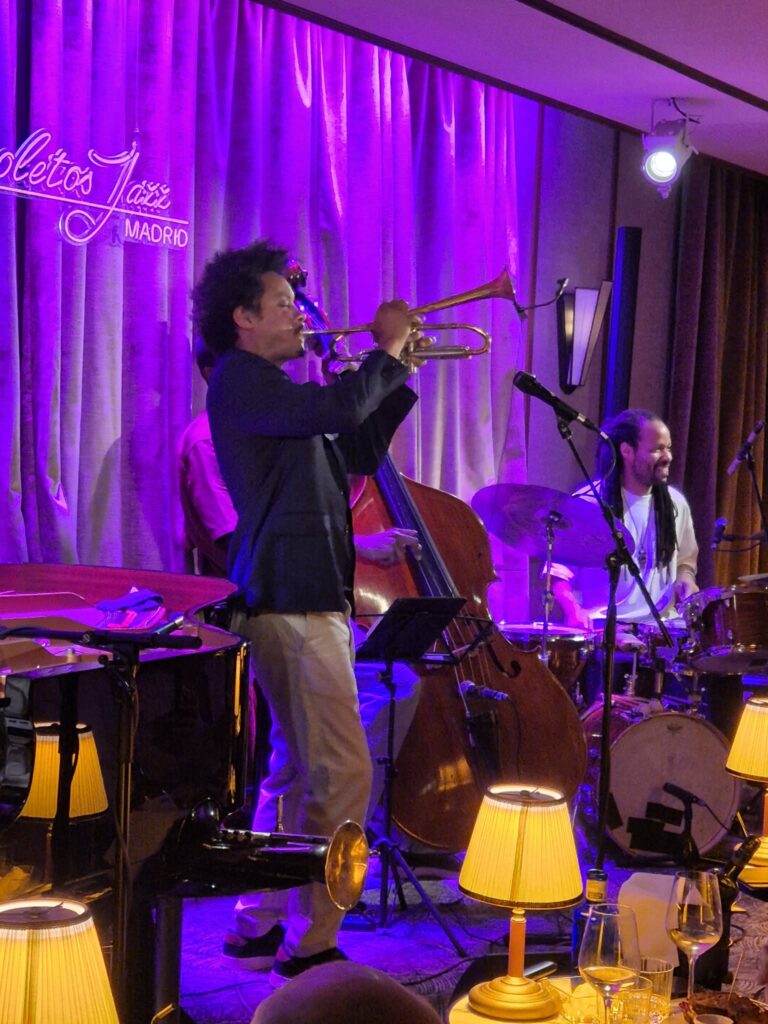
At the centre of this construction, Sarduy did not behave like a soloist surrounded by other musicians, but like an artist who constantly provokes dialogue. He knows how to command the stage, but also how to withdraw from it. He knows how to introduce an idea and then entrust it to the others. He listens before he answers, and you can hear that in the music.
In the great moments of jazz, musical friendship is not a biographical detail. It becomes a form of composition.
You hear it in the confidence with which one musician abandons a phrase, knowing that someone else will continue it. In the way the rhythm shifts without any visible command. In that almost imperceptible second when everyone seems to understand that the piece must move in another direction.
This capacity to create together also lies at the heart of my collaboration with Carlos Sarduy in The AfterSound, a jazz and theatre project in which the music does not illustrate the text, and the text does not attempt to explain the music.
In The AfterSound, we searched for a space in which these two forms of expression could confront and transform one another. From the beginning, Carlos understood that the project did not need a soundtrack. It needed an autonomous musical presence, capable of creating meaning alongside the action on stage.
Working with him means accepting that the music will alter the structure you thought you knew.
A text may have its own duration, rhythm and intention. But when Carlos Sarduy’s trumpet enters, all of these elements must remain alive. A pause may grow longer. A sentence may acquire a different weight. An ending may cease to be an ending, because the music opens another space beyond the final word.
This is not gratuitous unpredictability. It is the freedom of an artist who understands construction so profoundly that he can afford to place it at risk.
The three evenings at Recoletos confirmed what our artistic collaboration had already shown me: Carlos Sarduy does not perform jazz as though it were a world that already exists.
He builds it in front of you.
He builds it out of sound, silence, rhythm, memory and the responses of the other musicians. Then he allows it to disappear with the final note, without trying to preserve it artificially.
That is precisely why every concert is unique. Not because this is the familiar promise printed on posters, but because improvised music cannot be repeated without becoming something else.
I attended all three concerts at Recoletos Jazz Madrid. I experienced them as a spectator, as a friend and as Carlos Sarduy’s partner in a project that has shown me how profoundly theatre can change when music refuses to remain in the background.
During those evenings, Madrid revealed to me the true force of jazz: it did not repeat a world that already existed. It built one before us and allowed it to disappear with the final note.
But not before changing something in those who had listened.
Some evenings end. Others remain.
Friendship preserves what the stage can never repeat.
Andrei Slăvuțeanu
Acesta este un site cu caracter informativ și educativ . Publicam aceste informații pentru cunoștințele culturale ale publicului. Dacă doriți să eliminăm o postare sau să facem modificări, vă rugăm să ne contactați. Nu intenționăm încălcarea dreptului de autor.
